

Finance · Personal Finance
Pay yourself like an employee
A simple system to separate your money, set aside taxes and save for retirement.
Personal finance for business owners starts with one rule: the business and the household are two separate budgets, connected by a paycheck you set on purpose. Owners who pay themselves on a schedule, set aside taxes the same day and save for retirement every month are far less likely to drain the business in a slow season or the household in a bad one.
This guide uses IRS figures for 2026 (retirement limits, the SEP cap and self-employment tax), IRS guidance on S corporation pay, the Federal Reserve Banks’ 2025 Small Business Credit Survey and the CalSavers program, all read Nov. 25, 2026. It is general information, not tax, legal or investment advice.
Why Owners Struggle With Personal Finance
An employee gets the same paycheck every two weeks, with taxes already withheld and a retirement plan on autopilot. An owner gets none of that by default. Income swings with sales, taxes come due in large quarterly bills, and the business account looks like personal money because the same person controls both.
The ties between business and personal money are also tighter than most owners expect. In the Federal Reserve Banks’ 2025 Small Business Credit Survey, fielded from Sept. 3 to Nov. 14, 2025, 59% of employer firms with debt had secured it with a personal guarantee, and 77% reported rising costs of goods, services or wages, or higher tariff-related costs. A personal guarantee means a business problem can become a household problem.
Step 1: Separate the Two Budgets
Start with separate accounts. Business income goes into a business bank account, and only a planned transfer moves money to your personal account. Pay business expenses from the business account and personal expenses from your personal account, every time. Clean separation makes your bookkeeping and tax return easier, and for an LLC or corporation it helps protect the liability shield.
- Business accounts: an operating account for daily income and bills, and a business savings account for taxes and reserves.
- Personal accounts: a checking account that receives your owner pay, an emergency fund and retirement accounts.
- Credit: a business card for business costs only; keep your personal and business credit separate.
- One transfer day: move owner pay on the same day each month or every two weeks.
Step 2: Choose How You Pay Yourself
How you take money out depends on your business structure. A sole proprietor or the owner of a single-member LLC usually takes an owner’s draw: a transfer of profit, with no payroll taxes withheld. The owner then pays income tax and self-employment tax on the business’s net profit, whether the money was drawn or left in the account.
How owners pay themselves, by structure
| Structure | How you are paid | What to watch |
|---|---|---|
| Sole proprietor or single-member LLC | Owner’s draw from profit | Tax is owed on net profit, not on the draw; set aside money for estimated taxes |
| Partnership or multi-member LLC | Draws and, in some cases, guaranteed payments | Each partner’s share of profit is taxed to that partner |
| S corporation | A W-2 salary through payroll, plus distributions | The IRS requires reasonable compensation before non-wage distributions |
| C corporation | A W-2 salary; dividends if declared | The company pays its own corporate tax; dividends are taxed again to the owner |
S corporation owners have one firm rule. The IRS says a shareholder who works in the business must receive reasonable compensation as wages before taking non-wage distributions, and it can reclassify distributions as wages. The IRS lists factors such as training and experience, duties, time devoted to the business, what comparable businesses pay for similar services and payments to non-shareholder employees. Our business structure guide compares the options for California owners.
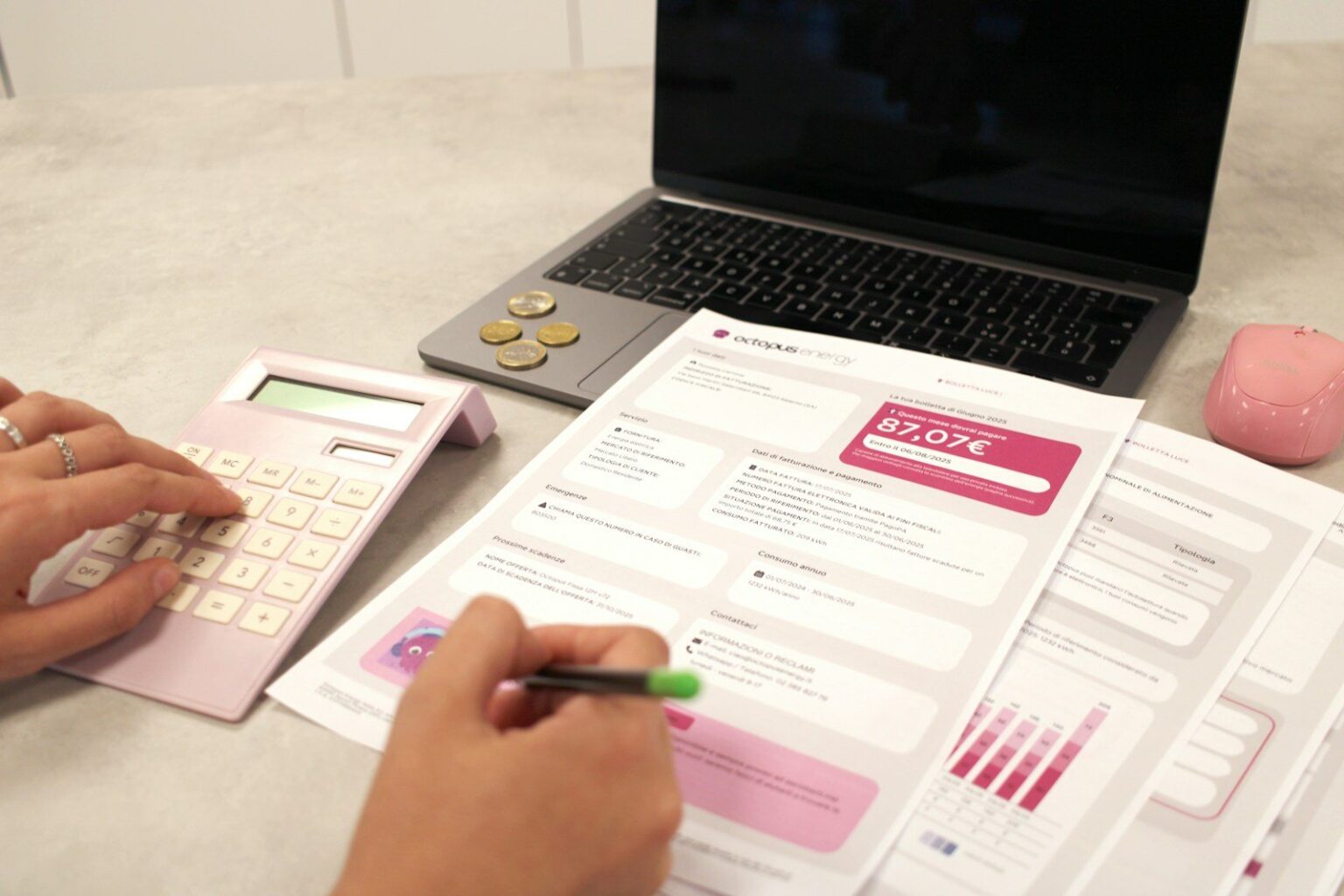
Step 3: Set Aside Taxes the Day You Pay Yourself
Self-employment tax surprises many new owners. The IRS rate is 15.3%: 12.4% for Social Security and 2.9% for Medicare. For 2026, the Social Security part applies to the first $184,500 of combined wages, tips and net earnings; the Medicare part has no cap. You must file Schedule SE when net self-employment earnings are $400 or more. An Additional Medicare Tax of 0.9% applies above $200,000 for single filers and $250,000 for married couples filing jointly.
Self-employment tax rate, 2026
Source: IRS. The Social Security part applies up to the $184,500 wage base for 2026. You can deduct the employer-equivalent portion of self-employment tax when you figure adjusted gross income.
That tax sits on top of federal and California income tax. The simplest habit is a tax account: each time you pay yourself, move a set percentage of profit into a separate savings account and use it only for estimated tax payments. Ask your tax professional to set the percentage from last year’s return. Our quarterly estimated taxes guide lists the 2026 federal and California due dates.
Step 4: Build a Simple Owner Pay System
A pay system turns irregular profit into a steady personal income. One common approach: decide on a fixed monthly owner pay that the business can cover in a slow month, then split any profit above it among taxes, a business reserve and a quarterly bonus to yourself.
Illustrative example: where each dollar of profit goes
- 50%Owner pay
- 25%Tax account
- 15%Business reserve
- 10%Retirement
Illustrative example. The right split depends on your tax bracket, structure, debt and how steady your sales are; set it with your accountant.
A monthly owner pay routine
- Close the booksReconcile last month’s income and expenses so you know the real profit.
- Pay the tax account firstMove your tax percentage to the tax savings account.
- Pay yourself the fixed amountTransfer your set owner pay to your personal checking account.
- Top up the reserveAdd to the business reserve until it covers your target number of months.
- Review each quarterRaise your fixed pay when the business has covered it for several months in a row; take any extra as a bonus.
Set your fixed pay from your household budget, not from your best month. List rent or mortgage, food, insurance, debt payments, child care and transportation, and add a cushion. If the business cannot cover that number yet, you know how much other income or savings the household needs while the business grows.
Step 5: Build Two Safety Nets
Owners need two cushions: a business reserve for slow months and a personal emergency fund for the household. Keeping them apart stops a household emergency from draining the business and a slow quarter from emptying your personal savings. Our business savings guide explains how to size a reserve, and the calculator below shows how many months a reserve covers.
How long would your cash reserve last?
Illustrative calculator. Enter your own monthly costs and savings.
Set the emergency fund target in months of household expenses, not in dollars, so it grows with your costs. Because owner income is uneven, plan for a larger cushion than a salaried worker would need, and adjust for your family, your partner’s income and any personal guarantees you have signed.

Step 6: Save for Retirement on Purpose
No employer is matching your contributions, so the plan has to be yours. The IRS raised most limits for 2026. These figures come from IRS news release IR-2025-111 and the IRS SEP page.
Retirement options for owners, 2026
| Option | 2026 limit (IRS) | Good fit for |
|---|---|---|
| SEP IRA | The lesser of 25% of compensation or $72,000 | Owners who want a simple plan funded by the business |
| Solo 401(k) | Employee deferral up to $24,500, plus an employer contribution | Owners with no employees other than a spouse |
| SIMPLE IRA | Employee deferral up to $17,000 | Small employers that want a basic plan with a match |
| IRA or CalSavers Roth IRA | $7,500; $1,100 more at age 50 and over | Owners starting small or saving on their own |
Ages 60 to 63 get a higher 401(k) catch-up of $11,250 for 2026, under the IRS release. Each plan has its own rules for employees, deadlines and paperwork, so compare them with a tax professional. Our retirement plans for small business guide goes deeper on each one.
CalSavers, the state’s retirement program, lets self-employed people, gig workers and independent contractors enroll on their own. The CalSavers FAQ says accounts are Roth IRAs, contributions can be one-time or recurring with a $10 minimum, and savers need earned income, a bank account and to be at least 18. Owners with no employees are not required to join, but it is an easy way to start.
Step 7: Protect the Household
Before you sign for a loan, a lease or a line of credit, read the guarantee. A personal guarantee lets the lender collect from you if the business cannot pay. Keep a list of every guarantee you have signed and review it each year.
- Insurance: review health, disability and life coverage for the household, and business insurance for the company.
- Debt limits: avoid using personal credit cards to cover business shortfalls for more than a short period.
- A will and beneficiaries: name beneficiaries on retirement accounts and keep a basic estate plan current.
- A partner conversation: agree as a household how much of your savings the business may use.
Common Mistakes
- Paying yourself whatever is left. Irregular draws make household planning impossible.
- Spending the tax money. Cash in the account is not all yours until the IRS and the Franchise Tax Board are paid.
- Mixing accounts. Personal bills paid from the business account blur your books and your deductions.
- Skipping retirement for the business. The business may not sell for what you expect; save on the side.
- Signing guarantees without a list. Know exactly what your household is on the hook for.
Key Terms
- Owner’s draw: money a sole proprietor or partner takes out of the business, with no payroll tax withheld.
- Reasonable compensation: the wage the IRS expects an S corporation to pay a shareholder who works in the business.
- Self-employment tax: Social Security and Medicare tax paid by self-employed people, 15.3% in total.
- Personal guarantee: a promise that makes the owner personally responsible for a business debt.
- SEP IRA: a simplified employee pension funded by the business, capped at the lesser of 25% of compensation or $72,000 for 2026.
The bottom line: personal finance for business owners works when the business pays you like an employer would. Separate the accounts, set a fixed owner pay, move tax money the same day, build two safety nets and save for retirement every month. Start with one transfer day this month and build from there.
Free help in the Sacramento region
You do not have to work through these decisions alone. SCORE Sacramento pairs owners with volunteer mentors, many of them retired executives, bankers and accountants, at no cost. The Sacramento Valley Small Business Development Center offers free one-on-one advising on financing, budgeting and financial statements. The SBA’s Sacramento District Office can explain loan programs and connect you with lenders, and community lenders such as California Capital and Opening Doors serve owners who need smaller loans or extra support. Browse our Business Resources and the free business help guide for more.
Keep learning: Planning your giving? Learn how a donor advised fund works.
Key takeaways
- Keep business and personal money in separate accounts, connected by a planned owner pay.
- Sole proprietors take draws; S corporation owners must take reasonable compensation as wages.
- Self-employment tax is 15.3%, and the Social Security part applies up to $184,500 for 2026.
- For 2026, the 401(k) deferral limit is $24,500 and the SEP cap is $72,000 (IRS).
- In the 2025 Fed survey, 59% of employer firms with debt used a personal guarantee.
Frequently asked questions
How should a small business owner pay themselves?
Sole proprietors and single-member LLC owners usually take an owner’s draw. S corporation owners who work in the business must receive a reasonable salary through payroll before taking distributions. In every case, pick a fixed amount the business can cover in a slow month and pay it on a schedule.
How much should I set aside for taxes?
It depends on your income, structure and deductions. Self-employment tax alone is 15.3% of net earnings, on top of federal and California income tax. Ask a tax professional to set a percentage from last year’s return and move it to a separate tax account each time you pay yourself.
What retirement plan is best for a self-employed person?
Common choices are a SEP IRA, a Solo 401(k), a SIMPLE IRA or an IRA. For 2026 the IRS lists a 401(k) deferral limit of 24,500 dollars, a SEP cap of 72,000 dollars or 25 percent of compensation if less, and an IRA limit of 7,500 dollars. Compare the rules with a tax professional.
Can self-employed people join CalSavers?
Yes. CalSavers says self-employed people, gig workers and independent contractors can enroll on their own if they have earned income, a bank account and are at least 18. Accounts are Roth IRAs and the minimum contribution is 10 dollars.
Should my business reserve and personal emergency fund be separate?
Yes. A business reserve covers slow months for the company, and a personal emergency fund covers the household. Keeping them apart stops one problem from draining both.
Sources
- IRS: 401(k) limit increases to $24,500 for 2026, IRA limit increases to $7,500 (IR-2025-111)
- IRS: SEP contribution limits (including grandfathered SARSEPs)
- IRS: Self-employment tax (Social Security and Medicare taxes)
- IRS: S corporation compensation and medical insurance issues
- Federal Reserve Banks: 2026 Report on Employer Firms (2025 Small Business Credit Survey)
- CalSavers Retirement Savings Program: Frequently asked questions