
Trending Business Ideas · Food Trucks
The number of U.S. food trucks and carts with paid staff more than doubled from 2018 to 2023. A food truck business lets a cook test a menu, build a following and grow into catering or a restaurant without signing a long lease first.

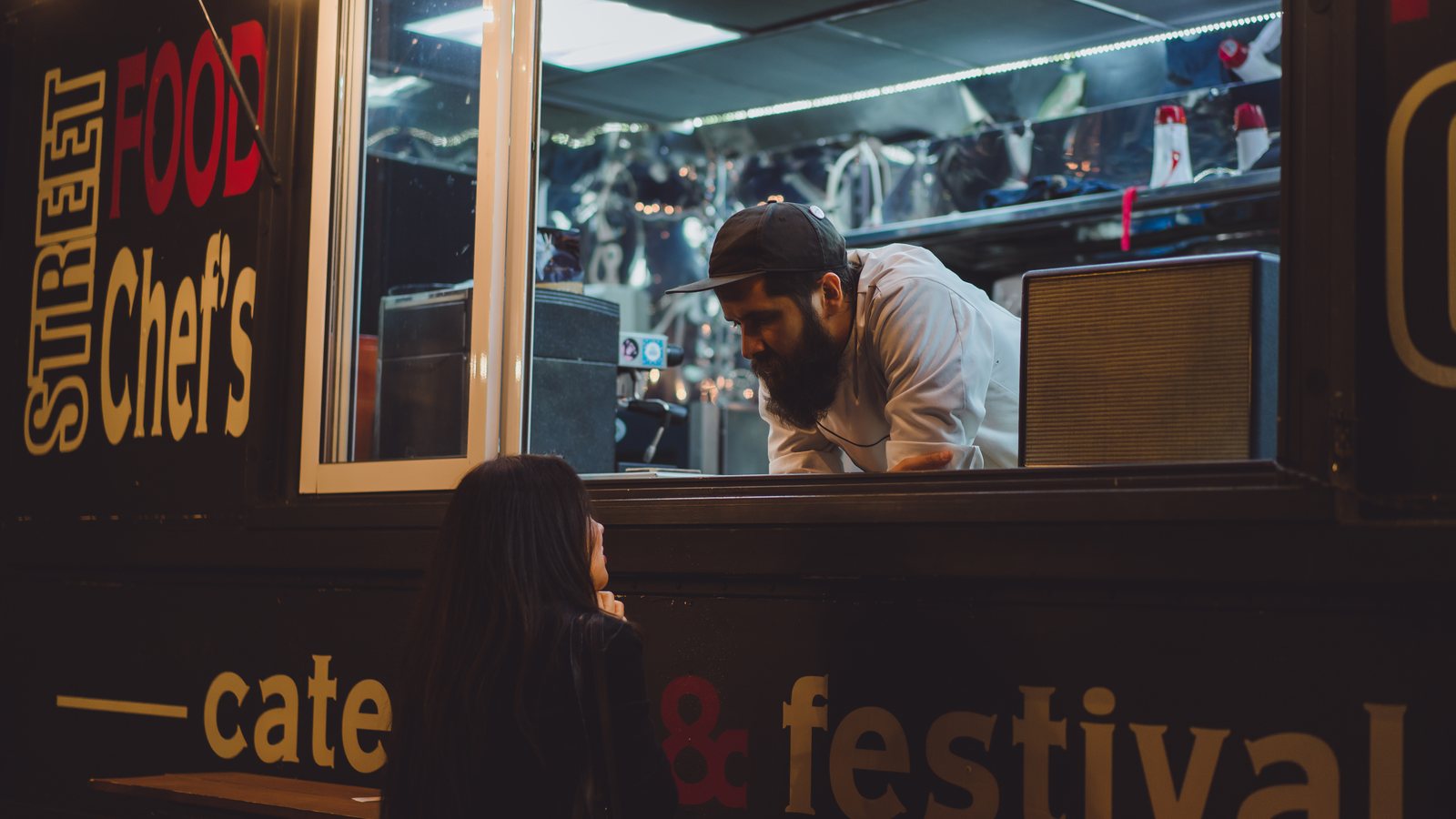
Lunch service from a truck window. Speed at the window is what makes or breaks a shift. Photo: Magnific.
The MarketFood Trucks Have More Than Doubled Since 2018
The U.S. Census Bureau counts mobile food services, the official name for food trucks and carts, in its County Business Patterns. In 2018 there were 5,970 of these businesses with at least one paid employee. By 2023, the latest year published, there were 12,487, and they employed 38,438 people with about $1 billion in yearly payroll. That count leaves out the many trucks run by the owner alone.
The wider market is huge. The National Restaurant Association projects U.S. restaurant and foodservice sales of $1.55 trillion in 2026, with about 15.8 million jobs. A truck only needs a sliver of that: a few hundred meals a week at lunch spots, breweries, office parks and events. Census also counted 406,608 one-person special food services businesses in 2024, the group that holds caterers, food trucks and carts, up from 371,535 in 2022.
U.S. Food Trucks and Carts With Paid Employees
Source: U.S. Census Bureau, County Business Patterns, NAICS 722330 Mobile Food Services, in thousands of establishments. 2023 is the latest year.
Food trucks with paid staff grew 73% from 2019 to 2023.
Fast food restaurants grew 6% over the same years (Census)
Why NowLower Entry Cost Than a Restaurant, and Diners Who Follow
A restaurant needs a lease, a build-out and a full staff before it sells a single plate. A truck needs a vehicle, a kitchen built to code, permits and a few people. That lets a cook prove a menu with real sales before taking on a lease. Diners help: social media makes it easy to post where the truck will be today, and breweries, office parks and apartment complexes now invite trucks on a schedule.
The job data supports more cooking work. The U.S. Bureau of Labor Statistics (BLS) projects jobs for restaurant cooks to grow 12% from 2025 to 2035, more than three times the 3.5% pace for all jobs. Fast food cooks are projected to grow only 1%, a sign that made-to-order food, the kind most trucks serve, is where demand is heading.

The IdeasSix Ways to Make Money With a Food Truck
Each of these can start small. The tags show whether it fits best as a side hustle, a full business, or both.
Specialty Food Truck
One focused menu, such as tacos, smash burgers or rice bowls, served at lunch and dinner stops. A short menu keeps lines moving and food costs under control.

Coffee, Dessert or Snack Cart
A cart or small trailer sells coffee, shaved ice, churros or lemonade at weekend markets and games. Lower cost than a full truck and easier to park.
Event and Catering Truck
Weddings, office parties, school events and festivals pay a set fee or a guaranteed minimum. Booked dates make income easier to plan.
Brewery and Apartment Route
A weekly schedule at breweries, office parks and apartment complexes that lack a kitchen. Regular stops build regular eaters.
Packaged Sauces and Goods
Sell your best sauce, spice mix or baked goods at the window and online. Food made for sale needs a licensed kitchen and labels that meet your state’s rules.
Truck to Restaurant
Use the truck’s sales and fan base to prove demand, then open a counter or small restaurant. Many owners keep the truck for events.
Side Hustle or Full Business?
Start as a Side Hustle
- A cart or small trailer at weekend markets, games and festivals.
- Rent time in a licensed shared kitchen instead of building your own.
- Test two or three menu items and track what sells out.
- Good test: can you sell out on most weekends for two months?
Grow Into a Full Business
- A full truck running lunch and dinner five or six days a week.
- Expect a vehicle loan or lease, a commissary, staff and more insurance.
- Add catering and private events to fill slow weekdays.
- A second truck or a small restaurant comes after steady, profitable months.
Inksight’s Scorecard for a Food Truck Business
A truck, kitchen equipment, permits and inspections take money and time.
Carts and weekend events work part-time; a full truck is closer to a full-time job.
Food trucks with paid staff more than doubled from 2018 to 2023.
Good sales are possible, but food, fuel and labor costs are high.
More trucks, catering or a restaurant, each with new costs and staff.
This scorecard is Inksight’s opinion based on the data above. It is not a guarantee of results.
Getting StartedHow to Start a Food Truck Business
- Pick one menu ideaChoose food you can cook fast and well in a small space. Five to eight items is plenty to start.
- Learn your local rules firstCall your city and county health department before you buy anything. Most require a health permit, a fire inspection, a business license and a commissary, a licensed kitchen where you prep and clean.
- Choose a cart, trailer or truckA cart or trailer costs less and suits weekends. A truck carries a full kitchen. Buy used only after the health department approves the layout.
- Plan your stopsLine up regular spots: breweries, office parks, apartment complexes and markets. Ask about parking rules; many cities limit where and how long trucks can stay.
- Price for your real costsAdd up food, packaging, fuel, commissary rent, permits and labor per plate, then set prices. Revisit prices every few months.
- Build a followingPost your weekly schedule on social media and a simple website, take card and phone payments, and collect emails for a list.
- Add cateringOnce your menu is steady, offer private events and catering with a minimum order. Booked dates smooth out slow weeks.
Know Before You StartThe Hard Parts
- Rules vary by city. Permits, parking limits and inspections differ from one town to the next, and a truck that moves between cities may need several.
- Costs are high. More than 9 in 10 restaurant operators named food, labor, insurance, energy or card fees as a big challenge in 2026 (National Restaurant Association).
- Profit is not automatic. 42% of restaurant operators said their restaurant was not profitable in 2025, a reminder to price carefully.
- Weather and breakdowns cost sales. A rainy week or an engine repair can wipe out a month’s profit. Keep a cash cushion.
None of these are reasons to skip the idea. They are why owners who plan carefully do well: a short menu, the right stops and steady catering work turn a truck into a dependable business. Start small, learn the rules, and let your regulars spread the word.
Key Takeaways
- U.S. food trucks and carts with paid staff grew from 5,970 in 2018 to 12,487 in 2023 (Census).
- That is 73% growth from 2019 to 2023, versus 6% for fast food restaurants and 5% for all businesses.
- U.S. restaurant and foodservice sales are projected at $1.55 trillion in 2026 (National Restaurant Association).
- BLS projects 12% job growth for restaurant cooks from 2025 to 2035, versus 3.5% for all jobs.
- Learn local rules before buying a truck, keep the menu short, and add catering for steady income.
QuestionsFrequently Asked Questions
Is a food truck business profitable?
It can be, but it takes careful pricing. Census counted 12,487 food trucks and carts with paid staff in 2023, more than double 2018, which shows demand is growing. Food, fuel, labor and permits are the big costs, and 42% of restaurant operators said they were not profitable in 2025 (National Restaurant Association).
Can I start a food truck business as a side hustle?
Yes, if you start small. A cart or small trailer at weekend markets, games and festivals fits around a day job. A full truck running lunch and dinner is closer to a full-time business.
What licenses do I need for a food truck business?
Most places require a business license, a health permit, a fire inspection, a food handler or manager certificate, and a commissary kitchen. Local health codes are based on the FDA Food Code. Check your city, county and state, and see the SBA’s licenses and permits guide.
What food sells best from a food truck?
Food that is fast to make and easy to eat standing up: tacos, burgers, rice bowls, sandwiches, coffee and desserts. A short menu keeps lines moving and waste low.
How much do cooks earn?
The BLS reports a median wage of $17.98 an hour for restaurant cooks in May 2025. Owners can earn more, or less, depending on sales, prices and costs.
Sources
- U.S. Census Bureau: County Business Patterns 2018-2023 datasets (2023 is the latest year)
- U.S. Census Bureau: Nonemployer Statistics 2022-2024 datasets (2024 is the latest year)
- National Restaurant Association: 2026 State of the Restaurant Industry (Feb. 12, 2026)
- BLS Occupational Outlook Handbook: Cooks
- BLS: Employment Projections 2025-35 (Aug. 27, 2026)
- FDA: Food Code (2026 edition)
- SBA: Apply for licenses and permits