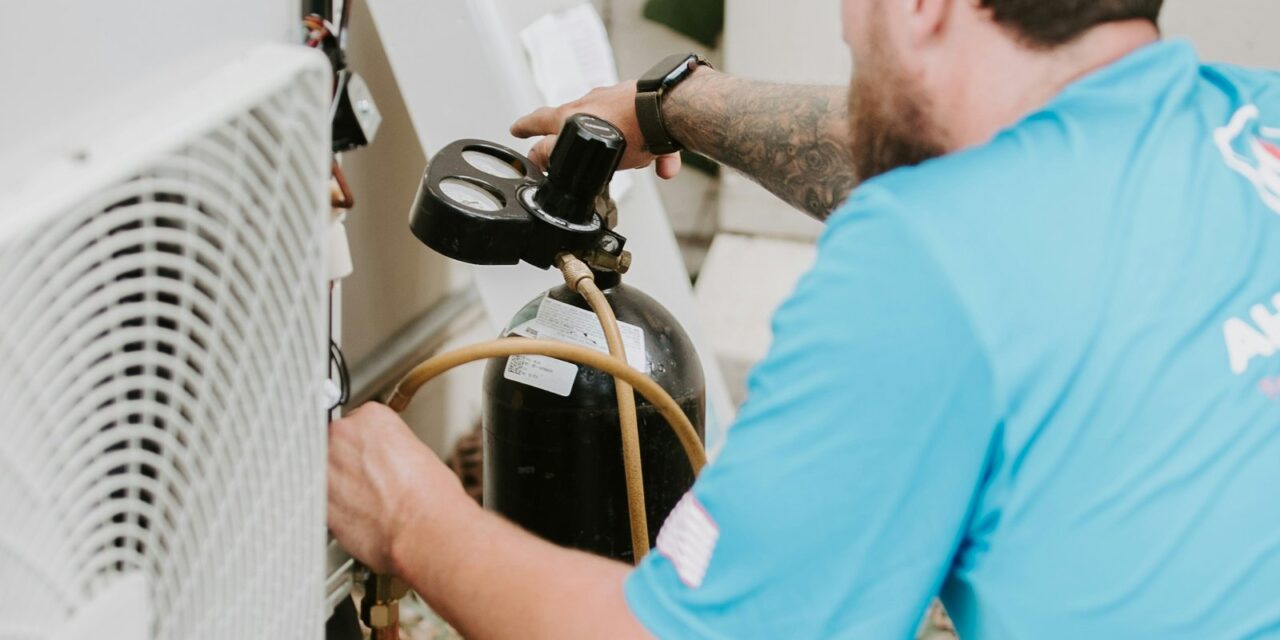
Trending Business Ideas · HVAC and Skilled Trades
Every building needs heat, cooling, power and water, and the people who keep them running are getting harder to find. An HVAC business, or an electrical or plumbing company, turns a licensed skill into a business that can start with one van and grow into a team of technicians.
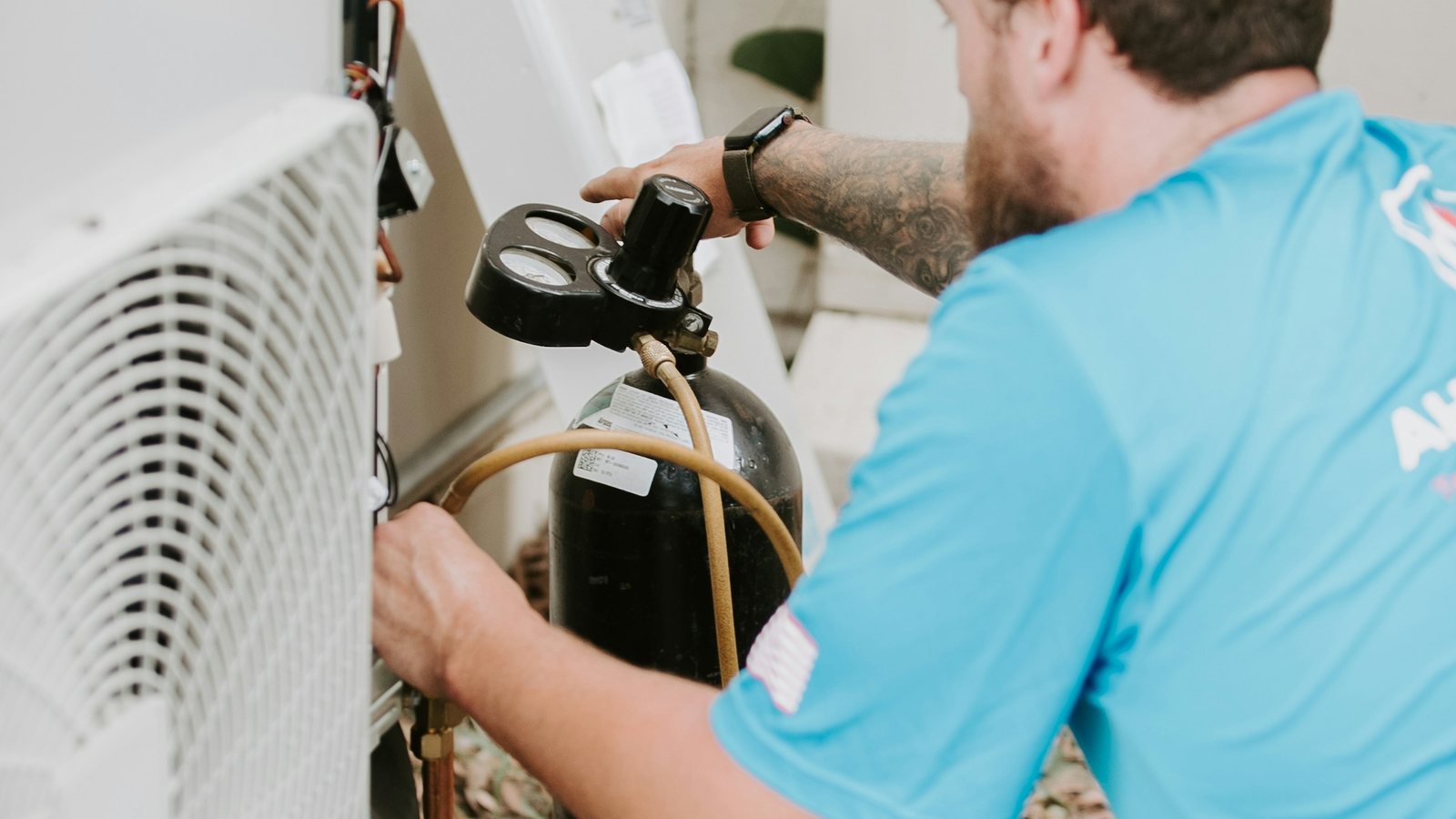
Service and repair calls are the steady core of most HVAC companies. Photo: Joel Muniz on Unsplash.
The MarketTrades That Every Building Needs
The U.S. Bureau of Labor Statistics (BLS) counted 440,900 jobs for heating, air conditioning and refrigeration (HVAC) mechanics and installers in 2025, and projects 11% growth to 2035, about three times the 3.5% pace for all jobs. That works out to about 40,600 HVAC openings a year, counting workers who retire or change careers. Electricians held about 821,000 jobs and plumbers, pipefitters and steamfitters 510,600, with about 72,700 and 42,000 openings a year.
Pay has climbed with demand. The median HVAC wage rose from $48,630 in May 2021 to $61,010 in May 2025. Electricians earned a median $63,190 and plumbers $63,800 in May 2025, all well above the $50,980 median for all jobs. A business owner keeps the margin between what clients pay and what the work costs, so the same shortage that lifts wages also lifts what a good contractor can charge.
U.S. Heating and Cooling Equipment Shipments, 2025
- Central air conditioners4.1M
- Air-source heat pumps3.64M
- Gas furnaces3.25M
Source: AHRI year-end 2025 U.S. shipment data, as reported by Contracting Business (Feb. 18, 2026). Total worked out by Inksight.
Every HVAC system that ships today is a service call tomorrow.
About 11 million central ACs, heat pumps and gas furnaces shipped in 2025 (AHRI)
Why NowRetirements Are Opening the Door
The Associated Builders and Contractors (ABC) estimates the construction industry must attract 349,000 net new workers in 2026 and 456,000 in 2027, and says most of the 2026 need comes from retirements, not growth. About one-fifth of all electricians are over 55. When experienced owners retire, their clients need someone new, and some sell their companies to younger technicians.
New equipment sales swing from year to year. Air conditioner shipments fell 26.2% in 2025, heat pumps fell 11.6%, and gas furnaces rose 4.1%, according to the Air-Conditioning, Heating, and Refrigeration Institute (AHRI). Service, repair and maintenance on the systems already in place keep going in good years and bad, which is why steady HVAC companies build on maintenance plans. Job growth for these trades beats the national average:
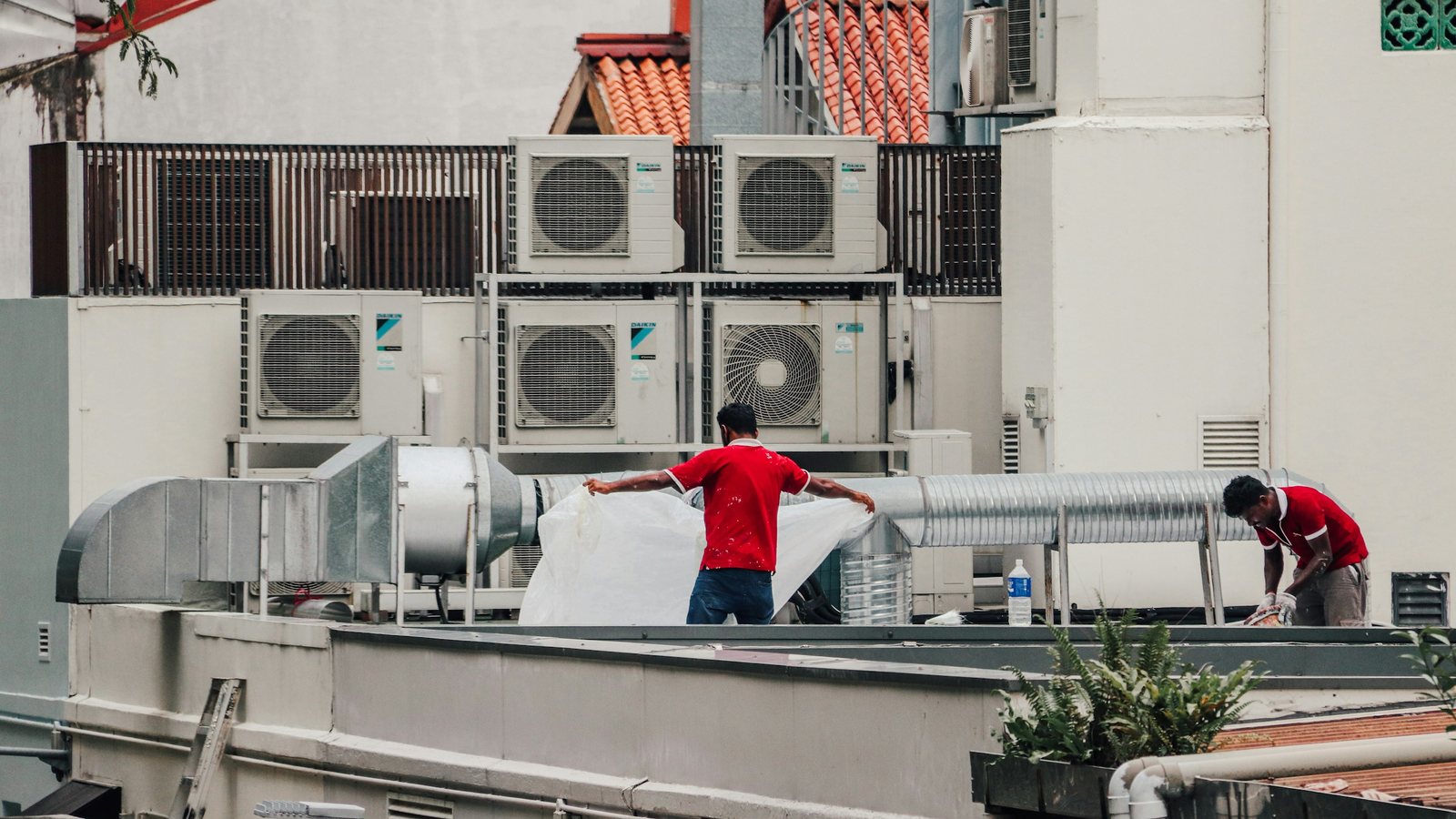
The IdeasSix Ways to Make Money in the Skilled Trades
Each of these can start small. The tags show whether it fits best as a side hustle, a full business, or both.
HVAC Service and Maintenance Plans
Tune-ups, repairs and yearly plans that bring clients back every spring and fall. Plans create recurring income and the first call when a system fails.

Residential Electrical Contracting
Panel upgrades, new circuits, lighting and EV chargers. It needs a license and pays well because few people can do it legally.
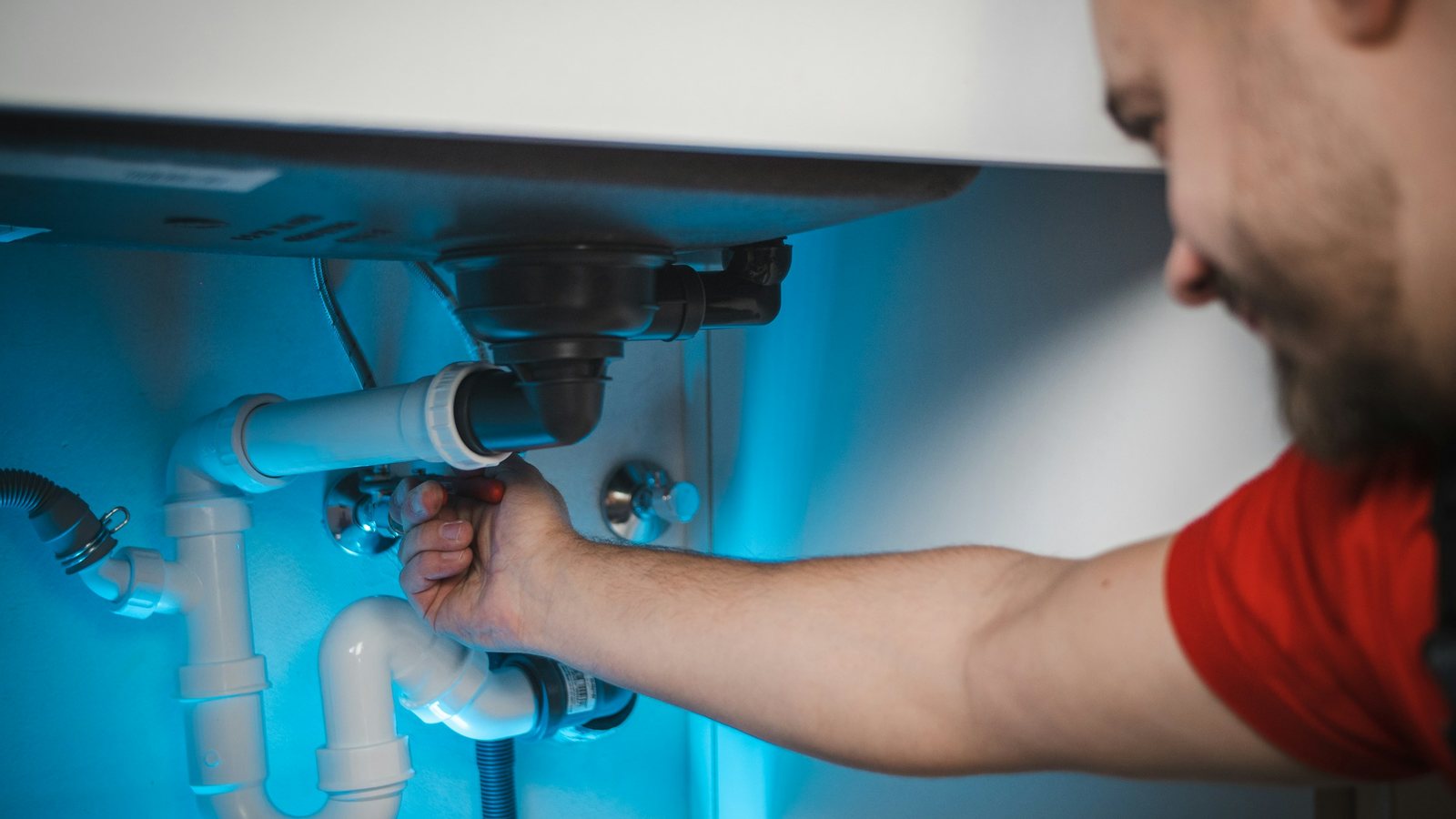
Plumbing Repair
Leaks, drains, water heaters and fixtures. Repairs are urgent, so clients pay for fast, reliable service.
Duct Cleaning and Indoor Air Quality
Duct cleaning, filters, air purifiers and humidity control. It takes less licensing than installs in many places and pairs well with HVAC service.
Weekend Repair and Small Jobs
Licensed technicians who work for someone else can take small jobs on weekends where their license and employer rules allow it.
Buying a Retiring Owner’s Company
With so many owners near retirement, buying an established shop brings clients, vans and staff at once. Check the books and client lists carefully.
Side Hustle or Full Business?
Start as a Side Hustle
- Licensed techs can take weekend repairs and small installs where allowed.
- Duct cleaning and filter service need less licensing in many places.
- Startup needs: tools, a vehicle, insurance and the right license.
- Good test: do referrals keep your weekends full for three months?
Grow Into a Full Business
- Service plans, installs and commercial work support vans and a crew.
- Expect a contractor license, bonding, insurance and permits.
- Hire apprentices early; skilled technicians are hard to find.
- Maintenance plans smooth out seasonal swings in heating and cooling.
Inksight’s Scorecard for an HVAC Business
Licenses, certifications and years of training come first.
Emergency calls and big installs do not fit a day job well.
BLS projects 11% HVAC job growth, and retirements are opening more spots.
Skilled, licensed work commands strong prices, especially with service plans.
Add vans and technicians; established shops are valuable to sell later.
This scorecard is Inksight’s opinion based on the data above. It is not a guarantee of results.
Getting StartedHow to Start an HVAC Business
- Get trained and certifiedMost HVAC technicians finish a certificate program or an apprenticeship. EPA Section 608 certification is required for anyone who services or disposes of equipment with ozone-depleting refrigerants.
- Earn your contractor licenseMany states and cities license HVAC, electrical and plumbing contractors, often after years of supervised work and an exam. Check your state licensing board.
- Set up the businessForm a company, get a business license, insurance, bonding where required, and workers’ compensation once you hire.
- Pick your first marketStart with residential service and repair in a few nearby zip codes, where you can answer calls quickly.
- Sell maintenance plansOffer spring and fall tune-ups on a yearly plan. Plans fill slow seasons and make you the first call when something breaks.
- Make booking and payment easyUse field service software for scheduling, quotes, invoices and online payment, and ask every happy client for a review.
- Hire apprentices and growTrain apprentices before you need them, then add vans and technicians as your plan list grows.
Know Before You StartThe Hard Parts
- Licensing takes years. Contractor licenses often require supervised experience and exams before you can run jobs on your own.
- Hiring is hard. The same shortage that raises prices makes skilled technicians hard to hire and keep.
- Seasons swing. Cooling calls spike in heat waves and heating calls in cold snaps, with slow weeks in between.
- The work is physical and risky. Attics, roofs, crawl spaces, electricity and gas all demand training and care.
None of these are reasons to skip the idea. They are why good trades businesses last for decades: clients rarely switch once they trust a technician. Get licensed, build a base of maintenance plans, and grow your team before the work outgrows you.
Key Takeaways
- BLS projects 11% HVAC job growth from 2025 to 2035, plus 9% for electricians and 7% for plumbers, versus 3.5% for all jobs.
- Median HVAC pay rose from $48,630 in May 2021 to $61,010 in May 2025.
- ABC says construction needs 349,000 net new workers in 2026, mostly to replace retirees.
- About 11 million central ACs, heat pumps and gas furnaces shipped in 2025, and each one will need service (AHRI).
- Get licensed and certified first, then build a base of maintenance plans and hire apprentices early.
QuestionsFrequently Asked Questions
Is an HVAC business profitable?
It can be. Demand is strong: BLS projects 11% job growth for HVAC technicians from 2025 to 2035, and the median HVAC wage rose to $61,010 in May 2025. Owners who sell maintenance plans and price for the skill involved tend to earn steadier profits.
Can I start an HVAC business as a side hustle?
Only partly. Licensed technicians can take weekend repairs where their license and employer allow it, and duct cleaning or filter service can start part time. Installs and emergency calls usually need a full-time business.
Do I need a license to start an HVAC business?
Yes, in most places. EPA Section 608 certification is required to handle refrigerants, and many states and cities license HVAC, electrical and plumbing contractors. See the SBA’s licenses and permits guide and your state licensing board.
Which skilled trade pays the most?
In May 2025, BLS reported median wages of $63,800 for plumbers, pipefitters and steamfitters, $63,190 for electricians and $61,010 for HVAC mechanics and installers, versus $50,980 for all jobs.
Is there a shortage of skilled trades workers?
Yes. ABC estimates construction must attract 349,000 net new workers in 2026, mostly to replace retirees, and 456,000 in 2027. It also says about one-fifth of electricians are over 55.
Sources
- BLS Occupational Outlook Handbook: Heating, air conditioning and refrigeration mechanics and installers
- BLS Occupational Outlook Handbook: Electricians
- BLS Occupational Outlook Handbook: Plumbers, pipefitters and steamfitters
- BLS: Occupational projections 2025-35 and median wages, May 2025 (Employment Projections, Aug. 27, 2026)
- BLS OEWS: HVAC mechanics and installers, May 2021
- ABC: Construction industry must attract 349,000 workers in 2026 (Jan. 15, 2026)
- Contracting Business: AHRI 2025 year-end U.S. heating and cooling shipments (Feb. 18, 2026)
- EPA: Section 608 technician certification
- SBA: Apply for licenses and permits