


























Tech Companies · Meta
Meta smart glasses, explained for business
What the 2026 Ray-Ban Meta, Meta Ray-Ban Display and Meta Glasses models cost, what the Muse AI agent adds, and where a pair earns its keep.
Meta smart glasses are the camera, speaker and AI-assistant eyewear Meta builds with EssilorLuxottica under the Ray-Ban, Oakley and Meta Glasses names, and at its Connect 2026 event in September, Meta turned them into its main consumer bet on artificial intelligence. For a small business owner, the question is practical: which pair does what, what does it cost, and where does it save time without creating privacy problems?
On Sept. 23, 2026, Meta introduced the Ray-Ban Meta (Gen 3), its first audio-focused pair called Ray-Ban Meta Audio, new Meta Glasses styles and new features for Meta Ray-Ban Display, the model with a built-in screen. Meta says it will offer more than 100 glasses options across Ray-Ban, Oakley and Meta Glasses by the end of 2026.
This guide is an independent explainer. Every price, date and specification comes from Meta’s own newsroom, blog or investor release; features Meta has only promised are labeled as coming. We did not test the glasses, so there are no “best pick” claims here.
The 2026 Meta smart glasses lineup
Meta now sells three broad kinds of AI glasses. Camera glasses take photos and video, play audio and answer questions through Meta AI. Audio glasses drop the photo features and focus on music, podcasts, calls and the assistant. Display glasses add a small full-color screen in the lens and come with the Meta Neural Band, a wristband that reads small hand movements as controls.
Meta smart glasses compared (U.S. starting prices)
| Ray-Ban Meta (Gen 3) | Ray-Ban Meta Audio | |
|---|---|---|
| Starting price | $449 | $349 (pre-order) |
| Availability | On sale Sept. 23, 2026 | Ships Oct. 13, 2026 |
| Battery (Meta) | Up to nine hours, one more than Gen 2 | Up to 12 hours, plus 48 with the case |
| Camera | 12 MP photos, 3K Ultra HD video | Built for audio: music, podcasts, calls, AI |
| Styles | Wayfarer, Aviator and Zena; 27 color and lens combinations | Clubmaster and Burbank; 23 combinations |
| Weight | Not stated by Meta | 43 grams |
The Gen 3 model adds a customizable action button for Meta AI, “dynamic photos” that let you pick the best frame, and a six-microphone array that Meta says removes more than 90% of background noise. It keeps the LED light that shows people nearby when the camera is recording, and Meta says Dolby Atmos video capture arrives later in 2026.
Meta Glasses and the special editions
Meta’s own Meta Glasses line added Capri and Nova styles. The new Meta Adventurer starts at $249, with sales from Oct. 23, 2026; the Ivory Meta Glasses by Kylie Jenner and two Meta Glasses by LISA editions start at $399. For the 90th anniversary of the Ray-Ban Aviator, an Aviator Connect Limited Edition sells from $579 for a limited time. Meta Glasses also reached Singapore, South Korea, Mexico and the United Arab Emirates, with Brazil coming soon.
Battery life by model, in hours (Meta’s figures)
Sources: Meta blog, Sept. 23, 2026 (Audio and Gen 3); Meta Newsroom, Sept. 17, 2025 (Display). Battery life varies with use; these are Meta’s “up to” figures.

Meta Ray-Ban Display: the pair with a screen
Meta Ray-Ban Display launched in the U.S. on Sept. 30, 2025, starting at $799 with the Meta Neural Band, at select stores such as Best Buy, LensCrafters, Sunglass Hut and Ray-Ban Stores. Meta lists up to six hours of mixed use, up to 30 hours with the charging case, and up to 18 hours for the Neural Band, which carries an IPX7 water rating.
The screen shows messages, a camera viewfinder, step-by-step Meta AI answers, live captions and translation, walking directions and music controls. At Connect 2026, Meta added cycling directions and real-time transit departures in the U.S. and Canada, meeting details from your calendar, and an early-access “hologram” for WhatsApp video calls in the U.S., a photorealistic version of your face driven by your voice. Mirrored phone notifications are listed as coming soon.
Availability widened too. Online ordering opened in the U.S., the glasses went on sale in Canada and the United Kingdom on Sept. 23, 2026, and France, Italy and Germany followed with sales from Oct. 13. Prescription versions arrived first through EssilorLuxottica stores in France and Italy.
Several Connect 2026 features, including Muse on the glasses, the WhatsApp hologram and notification mirroring, were announced as arriving later in 2026 or in the coming months. Buy for what a model does today, and treat promised features as a bonus if they arrive.
Muse: Meta’s AI agent comes to the glasses
On Sept. 8, 2026, Meta launched Muse, a personal AI agent that, in Meta’s words, “doesn’t just answer questions, it actually does the work.” It runs in the U.S. on iOS, Android and muse.ai, can be reached in WhatsApp, and Meta says it is free for most of what people need, with paid plans for more. Meta says Muse is coming to its AI glasses in the coming months, so you could say its name and ask it to act on what you are looking at.
For business owners, the interesting parts are the connectors and the guardrails. Meta lists connections to Notion, Granola, GitHub, Box, PayPal and Shop Pay, plus retailers such as Walmart, Best Buy and Wayfair. Meta says a separate “Sentinel” agent must approve anything Muse sends to the internet, Muse checks with you before sending email or buying, it has no visibility into passwords or payment methods, and its conversations are not shared with Meta’s ad systems. Our AI agents guide explains how agents like this work and where they go wrong.
Where Meta smart glasses help a small business
Content without stopping work
A florist arranging an order, a contractor finishing a kitchen or a chef plating a dish can capture point-of-view photos and video without putting down tools. That footage suits short-form posts; see our Instagram for business guide and YouTube for business guide for where it goes next.
Calls, questions and directions
Open-ear speakers and the noise-reducing microphones let owners take calls while driving to a job or carrying stock. On the Display model, captions and translation can help with a customer who speaks another language, a real need in a region as diverse as Sacramento, and turn-by-turn directions appear in the lens instead of on a phone.
Accessibility
Meta announced FDA-cleared hearing enhancement software for adults with perceived mild to moderate hearing loss, launching in the U.S. later in 2026 for $149.99 and eligible for HSA and FSA funds. For an owner or employee with mild hearing loss, that could make a busy shop floor easier to manage.
Rolling out AI glasses in a small team
- Pick one jobChoose one task, such as job-site photos, hands-free calls or translated customer conversations, and measure the time saved for 30 days.
- Choose the model for that jobAudio glasses for calls and music, camera glasses for content, the Display model only if you need captions, directions or a viewfinder.
- Write a recording ruleDecide where staff may not record, such as near payment screens, customer files or restrooms, and tell customers when you film.
- Set up accounts carefullyUse a business account where possible and review which apps Meta AI or Muse can reach.
- Review and decideKeep the glasses in the workflow only if they saved real time or brought in content you actually used.
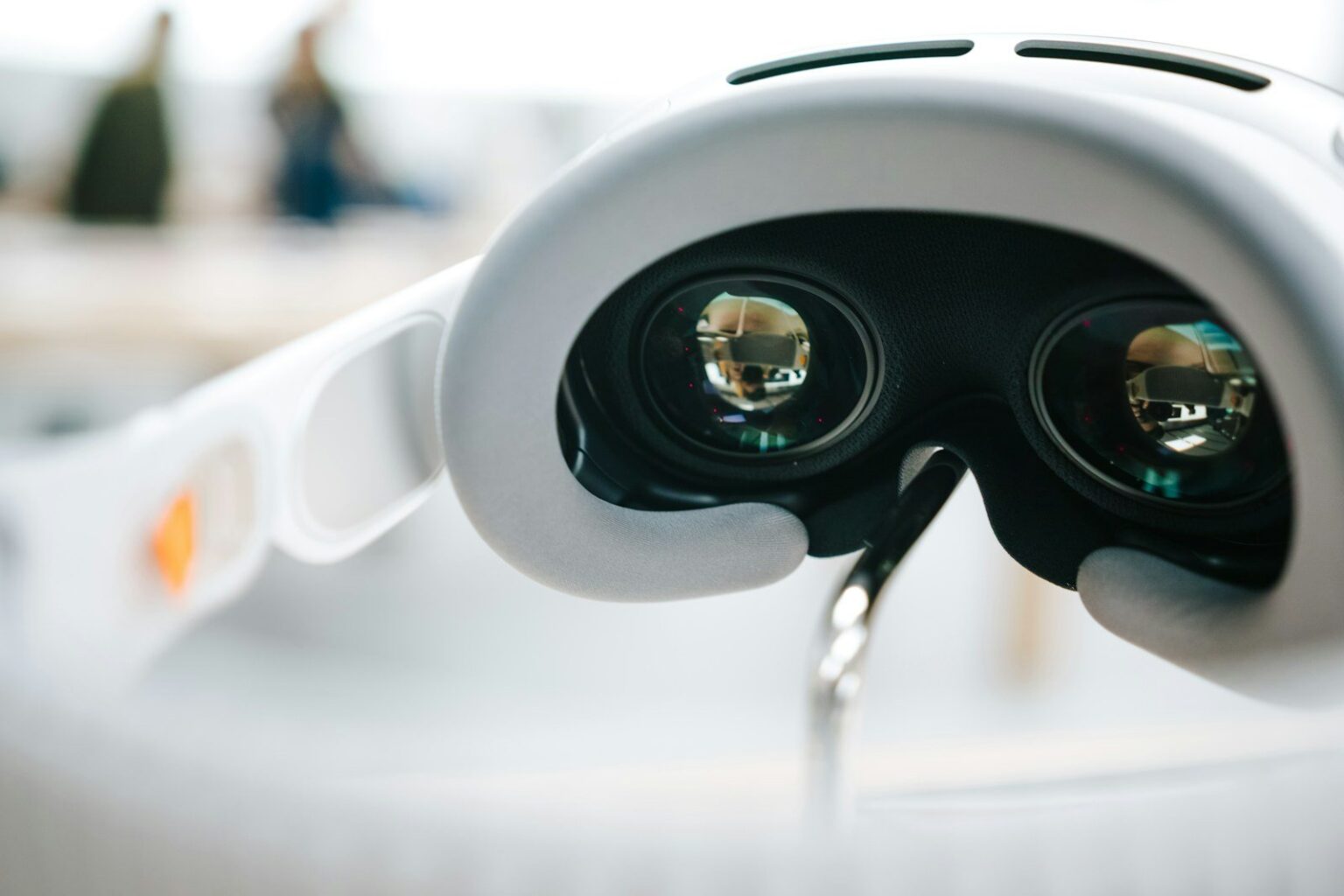
Privacy: the question every customer will ask
Glasses that can record are more discreet than a phone held up in the air, and that is exactly why people worry. Meta keeps a capture LED that lights up when the camera records, and Ray-Ban Meta Audio glasses are built for listening rather than photos. Still, the duty to respect customers and employees falls on the person wearing them.
- Ask before recording people. Get clear permission before filming customers, staff or conversations, and check California’s consent rules with your attorney.
- Keep sensitive areas camera-free. Checkout screens, paperwork and private spaces should stay off limits.
- Limit what the assistant sees. Do not point an AI assistant at customer card numbers, health details or confidential documents.
- Review agent permissions. Muse lets users choose which apps it connects to, whether it can only read or also send email, and to revoke access at any time.
Why Meta is spending so much on glasses
Meta’s glasses and headsets sit in its Reality Labs segment, which still loses money. In the third quarter of 2026, Reality Labs reported $443 million in revenue, down from $470 million a year earlier, and an operating loss of $4.13 billion, compared with $4.43 billion. Meta as a whole reported $64.6 billion in revenue for the quarter.
Reality Labs, third quarter of 2026
Source: Meta Reports Third Quarter 2026 Results, Oct. 21, 2026. Costs are revenue minus the reported operating loss ($443 million + $4,129 million), rounded.
For buyers, that spending cuts both ways. Meta is subsidizing a fast pace of new models and features, which is good for prices. It also means the lineup changes quickly, so a pair bought today may be replaced by a newer model within a year.
Meta also showed Meta VR Glasses at Connect 2026, a virtual reality device it says weighs about 100 grams, for 3D movies and immersive live sports. It is a separate product from the AI glasses, and Meta had not posted a price on the pages we checked. For how the other big platforms approach AI hardware, see our Apple Intelligence guide and Samsung Galaxy AI guide.
Common mistakes
- Buying the screen model for audio jobs. If you mainly take calls, the $349 Audio pair fits.
- Counting on promised features. Muse on glasses and the hologram were not live at launch.
- Recording without consent. A discreet camera still needs a clear permission habit.
- Mixing personal and business accounts. Keep business content and contacts separate.
- Skipping the 30-day test. Measure time saved before buying glasses for a whole team.
Key terms
- AI glasses: eyewear with speakers, microphones and usually a camera that connects to an AI assistant through a phone.
- Meta Ray-Ban Display: Meta’s glasses with a full-color screen in the lens, sold with the Meta Neural Band.
- Meta Neural Band: a wristband that reads electrical signals from small hand movements (EMG) to control the glasses.
- Muse: Meta’s personal AI agent, launched Sept. 8, 2026, that can carry out tasks with your permission.
- Reality Labs: the Meta business segment that builds AI glasses, virtual reality headsets and related software.
The bottom line: Meta smart glasses now come in three flavors, from $249 Meta Glasses and the $349 Ray-Ban Meta Audio to the $449 Ray-Ban Meta (Gen 3) and the screen-equipped Meta Ray-Ban Display. For a small business, they work best for one clear job: hands-free calls, point-of-view content or translated conversations. Buy for today’s features, set a recording rule first, and test for 30 days before outfitting a team.
Free help in the Sacramento region
You do not have to work through these decisions alone. SCORE Sacramento pairs owners with volunteer mentors, many of them retired executives, bankers and accountants, at no cost. The Sacramento Valley Small Business Development Center offers free one-on-one advising on financing, budgeting and financial statements. The SBA’s Sacramento District Office can explain loan programs and connect you with lenders, and community lenders such as California Capital and Opening Doors serve owners who need smaller loans or extra support. Browse our Business Resources and the free business help guide for more.
Key takeaways
- Ray-Ban Meta (Gen 3) starts at $449 with up to nine hours of battery and a 12 MP camera (Meta, Sept. 23, 2026).
- Ray-Ban Meta Audio starts at $349, weighs 43 grams and shipped Oct. 13, 2026.
- Meta Ray-Ban Display launched at $799 in 2025 and reached Canada, the UK, France, Italy and Germany in 2026.
- Muse, Meta’s AI agent, launched Sept. 8, 2026; Meta says it comes to the glasses in the coming months.
- Reality Labs lost $4.13 billion in the third quarter of 2026 on $443 million in revenue.
Frequently asked questions
What are Meta smart glasses?
Meta smart glasses are AI glasses Meta makes with EssilorLuxottica under the Ray-Ban, Oakley and Meta Glasses names. They have open-ear speakers, microphones, Meta AI and, on most models, a camera; Meta Ray-Ban Display adds a screen in the lens.
How much are Ray-Ban Meta glasses in 2026?
Meta lists the Ray-Ban Meta (Gen 3) from 449 dollars and Ray-Ban Meta Audio from 349 dollars. Meta Glasses start at 249 dollars for the new Adventurer, and Meta Ray-Ban Display launched at 799 dollars with the Neural Band.
What is the difference between Ray-Ban Meta and Meta Ray-Ban Display?
Ray-Ban Meta glasses have no screen; you hear answers and take photos. Meta Ray-Ban Display adds a full-color display in the lens for messages, captions, directions and a camera viewfinder, controlled with the Meta Neural Band wristband.
Do Meta smart glasses have Muse?
Not yet at launch. Meta launched Muse on Sept. 8, 2026, on iOS, Android, muse.ai and WhatsApp in the U.S., and says it is bringing Muse to its AI glasses in the coming months.
Are Meta smart glasses good for small business?
They can help with one clear job, such as hands-free calls, point-of-view photos and video for social media, or translated conversations on the Display model. Set a recording and privacy rule first and test for 30 days before buying more pairs.
Sources
- Meta: Introducing Ray-Ban Meta Audio and Our Deepest Lineup of AI Glasses Yet (Sept. 23, 2026)
- Meta Newsroom: The Biggest News From Connect 2026 (Sept. 24, 2026)
- Meta Newsroom: New Features for Meta Ray-Ban Display (Sept. 2026)
- Meta Newsroom: Meta Ray-Ban Display: AI Glasses With an EMG Wristband (Sept. 17, 2025, updated Sept. 30, 2025)
- Meta Newsroom: Introducing Muse, a personal AI agent (Sept. 8, 2026, updated Nov. 10, 2026)
- Meta Investor Relations: Meta Reports Third Quarter 2026 Results (Oct. 21, 2026)
Keep reading on Inksight
- Business Credit vs. Personal Credit: What Every Small Business Owner Should Know
- How to Choose a Business Structure in California: Sole Proprietorship, LLC, S Corp or C Corp
- Business Banking 101: How to Choose and Open a Business Bank Account
- Small Business Funding Options: Loans, Grants and Investors
- Business Resources: all guides →